

Franchise branding gives every BC location a consistent identity through 3 parts: a fixed core, clear rules for local adaptations, and easy access to current assets. Together, they help people who aren't designers make sound brand decisions without asking for approval every time. The aim is to make consistency practical.
One location's sign is a slightly different green. A franchisee's printer matched the colour from a screenshot. A second Instagram account uses the wrong logo crop. Individually, these differences can seem minor. Together, they weaken the recognition you're paying to build. A system for branding across multiple locations helps prevent that drift.
Here's how to identify the causes, build the 7 essential parts of the system, and decide what head office controls. You'll also see how to introduce those standards across locations that already use inconsistent materials.
How do franchise marketing and franchise branding differ?
Franchise marketing creates demand through campaigns, local advertising, promotions and lead generation. Franchise branding provides the identity behind that work: how the business looks, sounds and is recognised at every location. Marketing attracts customers; branding helps them remember the business.
When each location presents a slightly different identity, its advertising builds recognition for a different version of the business. That makes it harder for your marketing investment to build shared awareness across the network. For budget decisions, see how branding and marketing split a budget. If you're still defining the business's direction and visual identity, our guide to brand strategy versus brand identity explains those foundations. Here, the focus is keeping an established identity consistent across locations.
| Franchise marketing | Franchise branding | |
|---|---|---|
| What it does | Creates demand at a location or across the network | Makes every location read as one business |
| What it looks like | Ads, promotions, local campaigns, sponsorships | Logo and colour rules, signage standards, templates, naming conventions |
Why does branding drift across locations?
Brand drift usually comes from 4 everyday pressures: speed, distance, local suppliers and staff turnover. A new site needs signs before opening day, but head office isn't available to approve them. The local printer can't find the right file, so someone rebuilds the logo from a screenshot. Months later, a new manager who hasn't been briefed on the brand is making those decisions before opening at 7am.
These situations expose gaps in the system. Clear rules help, but staff also need the files and templates to follow them. When approved assets are easy to find and use, there's less reason to improvise.
According to Marq's brand consistency research, drawn from a Lucidpress survey of more than 400 brand management specialists, 85% of organisations have brand guidelines but only 30% enforce them consistently. Having a guide doesn't mean it reaches the person ordering signs or creating a promotion. The same research reports that companies estimate consistent branding could produce a 10% to 20% lift in growth and revenue. That's a self reported estimate from marketers, so it indicates a possible benefit rather than a measured promise.
The scale of franchising makes consistency a widespread concern. The Canadian Franchise Association's Economic Outlook 2023 counts more than 65,000 franchise locations across Canada and puts franchising's contribution to national GDP at $117 billion by 2024, up from $100 billion in 2019, making it the country's 13th largest industry.
“Even small deviations from approved language or visuals can dilute the brand.”
Amanda Parker, Country Manager, Canada, Constant Contact, writing in Franchise Canada
What does a brand system for multiple locations contain?
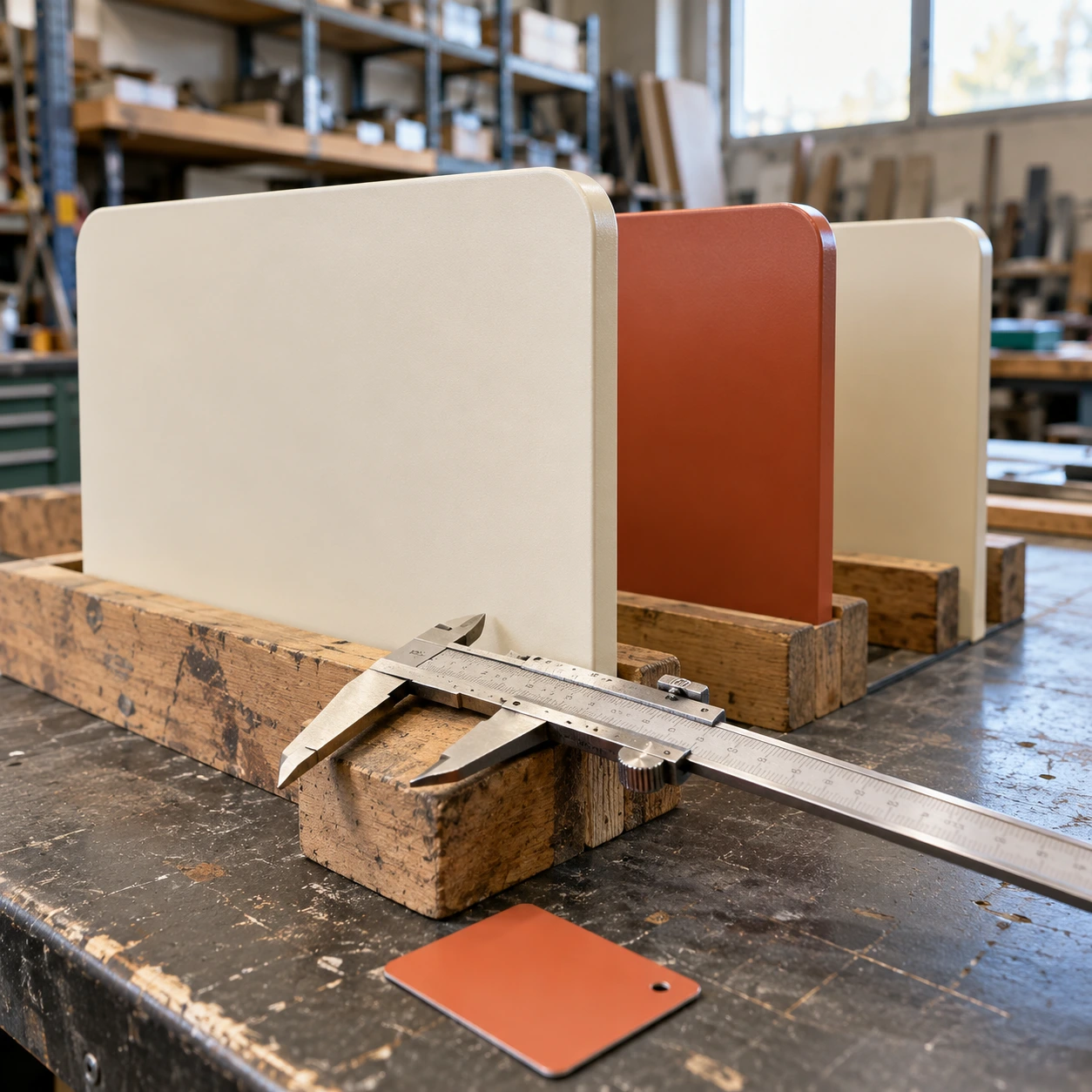
A brand system for multiple locations needs 7 practical components. Each addresses a recurring decision, from ordering signage to creating local promotions. Less visible parts, such as file storage and naming conventions, are just as necessary as the visual standards.
A fixed core identity
Define approved logo arrangements, colour values and typefaces. Supplying only hex codes leaves print suppliers guessing at CMYK and Pantone equivalents, which is how signs end up with visibly different colours. Specify all 3 so suppliers have clear values to work from. Our guide to building a brand style guide covers what to include in the document.
Signage and environmental standards
Set sizes, clearances, materials and finishes, and provide the files a fabricator needs. Without a shared specification, each site gets whatever its local sign shop finds easiest to produce. For the logo variations and file formats behind those standards, see the logo variations that survive every format.
Location naming and address conventions
Define how each location's name and address appear on the website, in directories, on invoices and at the entrance. Consistent naming supports local search and avoids discrepancies that become expensive to untangle as the business grows.
Templates for everyday local materials
Supply templates for materials location teams actually create: social posts, hiring notices, promotions, menus or service lists, and vehicle graphics. A manager who can make a hiring notice in 4 minutes with an approved template has little reason to start a new design in Canva. Our guide to social media brand templates explains the time savings.
One place for current brand assets
Keep current assets in one place, with the latest versions easy to identify. Roughly two in three of the multi-location clients who come to us arrive with a brand guide already written and almost none of the files it refers to, which is why the guide isn't working. Staff need access to the files behind the rules to put the guide into practice.
Photography direction
Set direction for subjects, lighting, framing and what to avoid. One location's phone photos beside another's commissioned images can make them look like different businesses, even with the same logo. Photography doesn't have to be expensive, but it needs a consistent approach.
A brief for new locations and franchisees
Give each new location or franchisee a brief on day 1, before anyone places an order. It should make the essential rules and assets easy to find. Many groups add this only after problems appear at the second site, even though it's an inexpensive way to prevent them.
What should head office control, and what can locations change?
A recurring question in multi location branding is who gets to make each decision. A permission model with 3 tiers gives managers a clear answer: what stays fixed, what they can adapt within rules, and what they can decide locally.
| Tier | Who decides | What sits here |
|---|---|---|
| Fixed | Head office only, never changes at a location | Logo, colour, type, name treatment, core signage |
| Flexible within rules | The location, inside a defined set | Photography subjects, local social content, promotional copy, community sponsorship material |
| Local | Genuinely the location's own call | Staff notices, community involvement, hours and local service notes |
The model works only when the fixed rules are short enough to remember and the flexible tier has usable assets. In our own work with BC groups running three or more sites, the systems that held had a fixed tier of nine items or fewer, while the ones that drifted had grown closer to thirty. A brief rule set backed by accessible templates is easier to apply than a lengthy guide without downloadable files.
Local promotional copy sits in the flexible tier, so managers need guidance on how the brand speaks. Our guide to brand voice and tone gives them a reference for writing consistently across locations.
How can locations stay relevant to their communities?
Consistency should still leave room for each location to reflect its community. If the system prevents all local variation, a site can feel disconnected from the neighbourhood it serves.
Community involvement, local photography, neighbourhood references and staff portraits can vary by location. The identity, tone and naming conventions should stay consistent. Names and addresses also connect branding to local search: consistency across your website, profiles and directories lets Google treat each location as a real place. If caught early, those discrepancies can be fixed in an afternoon.
For the practical search steps, see our guides to Google Business Profile for BC service businesses and local SEO beyond your Google Business Profile. Trades businesses with several branches often encounter these issues early. Our article on web design for home service businesses in Metro Vancouver covers their specific website needs.
How do you introduce the system across existing locations?
If your locations already use inconsistent materials, you don't need to replace everything at once. A phased rollout makes the work more affordable and lets you prioritise the surfaces customers see most.
- Audit what exists at each location. Visit or photograph each site and record its signs, vehicles, windows, printed materials, uniforms and profile images. Base the audit on what's actually in use so the rollout addresses real differences.
- Lock the core before touching anything. Confirm the approved logo arrangements, colour specifications and typefaces, then make the files accessible to everyone. If the core changes halfway through, you'll have to redo the work.
- Fix the most visible surfaces first. Prioritise signage, vehicles, the website and social profile images. These carry much of the brand's recognition and are often the first things customers see.
- Let print and internal material turn over naturally. Update stationery, forms, menus and internal documents as stock runs out or items are reordered. That avoids discarding usable inventory.
- Give every location the brief. Give each site the permission model, essential rules and access to the asset folder. New managers can then follow the same system from the start.
For a group of a few sites, we'd usually expect the high-visibility surfaces to be consistent within about six to eight weeks, with the long tail of print and internal material taking the better part of a year as stock cycles through.
If the audit shows that the identity itself needs work, settle that before investing in new signs. Our guide to brand refresh versus full rebrand helps distinguish a problem with the core identity from inconsistent application.
What affects the cost, and what can you do yourself?
An owner or operations lead can organise the asset folder, define the naming and address convention, and draft the brief for new locations. Completing those tasks first reduces the studio time spent organising files and clarifying how the business operates.
A designer is needed for colour specifications across print and digital, signage standards a fabricator can quote from, and templates that preserve the brand when staff edit the text. Errors in these systems can be repeated at every location, making them expensive to reverse.
On scope, a brand system for a group of three to eight sites usually runs two to three times a single-location identity, mostly because of the signage specification and the template set rather than the core design itself. Building the system before opening location 2 is the cheapest time to do it, and our startup branding service is often the closer fit at that stage. If the identity also needs to extend to a website with a clear structure for each location, our web design service covers that work.
Frequently Asked Questions
What is franchise marketing?
Franchise marketing creates demand across a franchise network and at individual locations through campaigns, local advertising, promotions and lead generation. Franchise branding supplies the shared identity behind those activities, helping customers recognise and remember the same business wherever they encounter it.
What is franchise branding?
Franchise branding is the system of identity rules and assets that keeps franchised and company owned locations consistent. It covers logos, colours, typefaces, signage, templates and rules for local adaptations. The system helps staff who aren't designers make correct brand decisions quickly.
How do you keep branding consistent across multiple locations?
Keep the core identity rules short, store current assets in one accessible place, and provide templates for the materials each location creates. Define what's fixed, what can change within rules, and what's decided locally. Staff can maintain consistency more reliably when they have both clear guidance and usable files.
What should a franchise brand guide include?
Include approved logo arrangements and clear space, RGB, CMYK and Pantone colour values, typefaces and fallbacks, signage standards, naming and address conventions, photography direction, and rules for local adaptations. Link the guide to a folder of current assets so staff can apply those standards.
Can a franchisee change the branding at their own location?
It depends on the permission tier. Logos, colours, typefaces and primary signage shouldn't change at individual locations. Local photography, community content and promotional copy usually can vary within defined rules. A clear guide explains the boundaries so franchisees can handle routine decisions without asking each time.
Franchise brand consistency depends on a manageable set of core rules, clear responsibility for local decisions, and accessible assets. Start with those foundations, then apply them to signage, websites and other visible materials. A practical system helps every location present the same business while leaving room for the people and communities it serves.
Parabolic Studio builds brand systems for BC businesses with more than one location. We develop the signage standards, templates and websites that help every site present a consistent identity.