
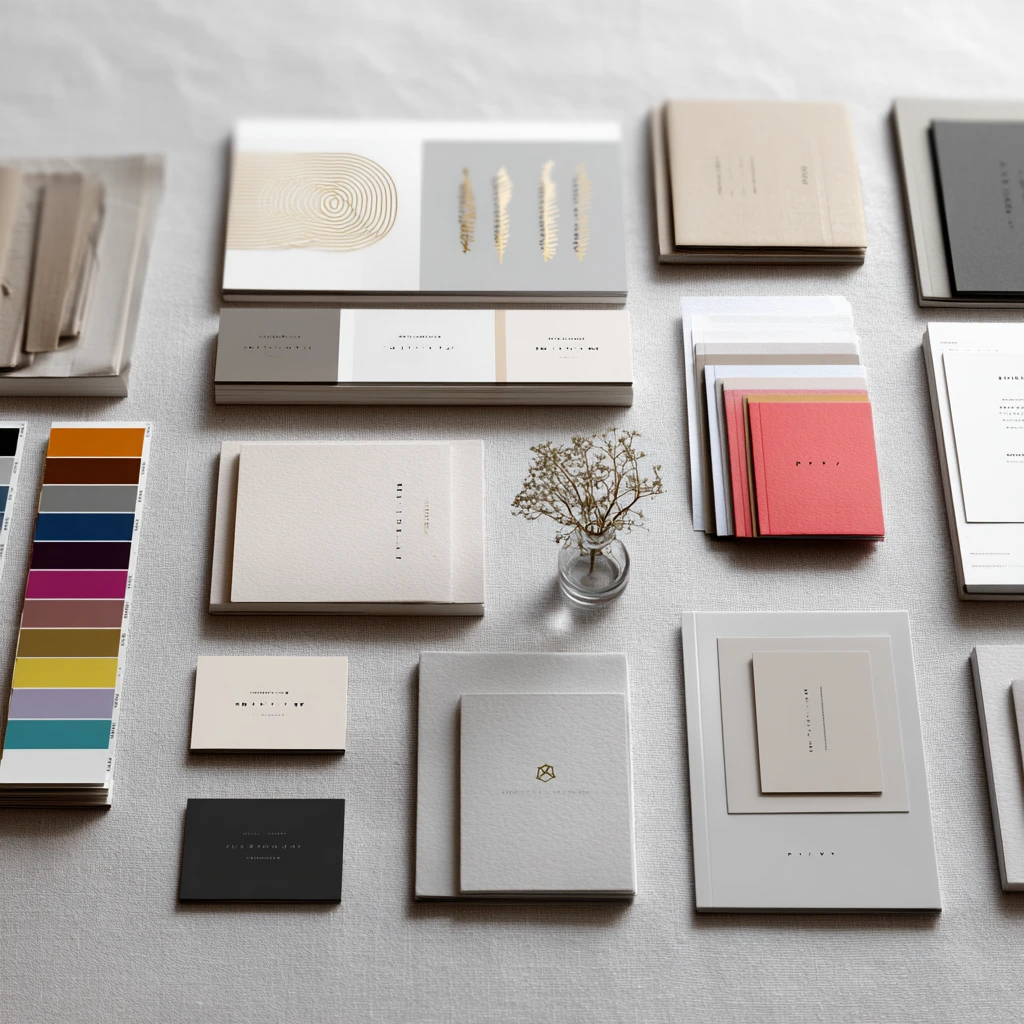
A brand style guide is the document that defines how your business looks and sounds, from your logo and colours down to the way you write a caption. Every agency will tell you small business branding falls apart without one. That is mostly true, and a little self-serving, because not every small business needs a full guide on day one. This article breaks down what actually goes inside a brand style guide, what it costs in Canada, and an honest answer to whether yours needs one yet.
What Is a Brand Style Guide?
A brand style guide is a document that defines how a business looks and sounds across every place it shows up. It collects the rules for your logo, colours, fonts, imagery, and tone of voice into one reference, so your brand stays consistent whether someone meets it on your website, in an Instagram post, or on a printed flyer.
Think of it as the rulebook the rest of your business plays by. Without it, three different people making three different posts will quietly drift in three different directions, and within a year your brand looks like three brands. The guide exists to stop that drift before it starts.
.webp)
What's Inside a Brand Style Guide?
A good small business brand style guide does not need to run a hundred pages. The essentials fit on a handful, and they cover these areas:
- Logo. Your primary and secondary logo files, the minimum size, the clear space around it, and the specific ways it should never be used (stretched, recoloured, placed on a busy background).
- Colour palette. Exact values for both print and screen, meaning HEX and RGB for digital and CMYK or Pantone for print. Naming each colour matters too, so your team is not eyeballing "the dark blue one."
- Typography. Your heading and body fonts, the sizes and weights, and the hierarchy that shows how a title, subhead, and paragraph relate. Picking the type is only half the job; the rules for using it are the other half.
- Imagery and photography style. The look and feel of the photos and graphics you use, with a few examples of what fits the brand and what does not.
- Brand voice and tone. How the business sounds in writing. Are you plain-spoken or polished, warm or precise? A short list of do and do-not phrases is often more useful than a paragraph of theory.
- Spacing, layout, and clear-space rules. How elements sit together on a page, and how much breathing room the logo and text need to feel intentional rather than cramped.
- Real examples of correct and incorrect use. The most-read pages in any guide. Showing a right way and a wrong way side by side teaches faster than any rule written out in words.
If you only ever document two of these, make them the logo rules and the colour values. Those are the two areas where inconsistency shows up fastest and looks the most unprofessional.
Does Your Small Business Actually Need One?
Here is the honest part. A brand style guide is genuinely valuable for some businesses and a premature expense for others. The deciding factor is rarely revenue. It is how many hands touch your brand.
A style guide earns its keep when:
- More than one person creates content (you have staff, a contractor, or a VA posting on your behalf).
- You outsource design and keep re-explaining your colours and fonts to every new freelancer.
- You are scaling, opening a second location, or franchising, and the brand has to travel without you in the room.
- You are about to invest in a website, packaging, or a marketing push and want it all to match.
It is probably premature when:
- You are a solo founder doing everything yourself, so the guide lives in your head anyway.
- You are pre-revenue or still testing the concept, and the brand may change before the guide is even printed.
- You have a logo and not much else, in which case a one-page mini guide is plenty to start.
There is no shame in starting small. A single-page sheet with your logo files, colour codes, and chosen fonts will carry an early-stage business a long way. The full document becomes worth it once the brand is being applied in more places than you can personally keep an eye on. And if you already have a brand that no longer fits the business you have become, that is a different problem entirely. Our piece on when it is time to rebrand covers the signs worth watching for.
Brand Style Guide vs Brand Identity vs Logo: What's the Difference?
These three terms get used as if they mean the same thing, and the confusion costs small business owners money. They sit on a spectrum, from a single asset to a whole system to the manual that governs it.
| Term | What It Is | Think Of It As |
|---|---|---|
| Logo | A single visual mark that identifies your business | One word in a sentence |
| Brand identity | The full visual system: logo, colours, fonts, imagery, and how they work together | The whole sentence |
| Brand style guide | The document that records how all of it should be used | The grammar that keeps the sentence correct |
A logo on its own is not a brand. A full brand identity for small businesses is the system, and the style guide is the manual that keeps that system from being misused. If you are starting from nothing, the natural order is to build the identity first and then document it in a guide. That is the same path we followed with DreamForge AI's brand identity, which we built from zero to launch before writing a single usage rule.
How Much Does a Brand Style Guide Cost in Canada?
Pricing depends almost entirely on how thorough the guide is, and on whether you buy it on its own or as part of a wider branding project. Most small businesses in Canada get their style guide bundled into a branding package rather than as a standalone purchase, which is usually the better value. Here is the honest range you will run into.
| Type | Cost Range (CAD) | What's Included | Best For |
|---|---|---|---|
| One-page mini guide (DIY or template) | $0–$500 | Logo files, HEX and CMYK colour codes, one or two fonts, a few basic usage notes | Solo founders still testing the concept |
| Standard guide (bundled with identity) | $1,500–$4,000 | Logo system, full palette, typography hierarchy, basic voice guidance, usage rules, delivered as part of a brand identity package | Established small businesses with a finished identity and more than one person making content |
| Comprehensive guide | $4,000–$10,000+ | Complete visual system, voice and tone, imagery direction, layout grids, ready-to-use templates, accessibility notes | Scaling businesses, franchises, or anyone outsourcing design regularly |
A standalone guide built from scratch sits at the higher end, because the designer has to define the brand before they can document it. If you are weighing up the cost of the individual pieces, our guide to logo design cost in Canada breaks down where the money goes. In practice, most owners we work with fold the guide into a single project rather than buying it separately. You can see how that is structured in our branding packages for small businesses.
DIY vs Hiring a Designer for Your Style Guide
You can absolutely make a first version of a style guide yourself, and for a solo founder testing an idea, that is often the right call. Free and low-cost tools will let you record your logo, colours, and fonts well enough to stay consistent in the early days. The cost is your time, and the result is good enough to keep you from contradicting yourself.
The honest trade-off is what a DIY guide cannot do. A document you build yourself tends to capture what you already have, rather than define what the brand should be. It writes down the colours you happened to pick, not the colours that will actually work across print, screen, and small sizes. A designer-built guide does the harder, less visible work first: choosing a palette that holds up everywhere, setting type that reads cleanly on a phone, and pressure-testing the logo against the places it will really be used.
The split is simple. If you are early and lean, start with a DIY one-pager and revisit it later. Once your brand is being applied across a website, social, print, and a growing team, a professional guide stops paying for itself in saved time and starts paying for itself in a brand that looks like it knows what it is doing. That is the same trust-first logic we apply to small business branding generally: spend where it earns, wait where it does not.
Frequently Asked Questions
Is a brand style guide the same as brand guidelines?
For most small businesses, yes. The terms are used interchangeably, and both describe the same thing: a set of rules for how your brand looks and sounds. Larger organisations sometimes separate them, using "brand guidelines" for high-level strategy and "style guide" for the visual specifics, but at the small business level you can safely treat them as one document.
How long is a typical small business brand style guide?
Shorter than most people expect. A practical small business guide is usually eight to twenty pages, and a starter mini guide can fit on a single page. Length is not the point; clarity is. A tight ten-page guide your team actually follows beats a fifty-page document nobody opens.
Can I make a brand style guide myself?
You can, especially the first version. Free and low-cost tools let a solo founder document their logo, colours, and fonts well enough to stay consistent early on. The trade-off is that a DIY guide tends to record what you already have rather than define what the brand should be, which is the part a designer adds. Many owners start DIY and upgrade once the brand is being used in more places.
Do I need a style guide if I only have a logo?
A logo is a starting point, not a brand, so a one-page guide is still worth it. Even a simple sheet listing your logo files, colour codes, and chosen fonts will save you from the slow drift that sets in when you are guessing at your own colours six months later. You do not need the full document yet, but you do need somewhere to write the basics down.
Your brand is one of the few assets that compounds over time, but only if it stays consistent. A style guide is how you protect that consistency as your business grows. Parabolic Studio builds brand identities and style guides for small businesses across Vancouver and BC, starting with strategy rather than just style.