

You've been told to build a personal brand. Nobody told you what that means, where it stops, or whether the thing you're building belongs to you or to a company you haven't started yet. So you post on LinkedIn when you remember to, you use a headshot from a wedding, and the work keeps arriving by referral anyway. If you're a Canadian consultant working out how to build a personal brand without painting yourself into a corner, the decision you're actually facing is simpler than it looks, and it has an order to it.
Personal brand vs business brand: what is actually different
A personal brand is the reputation attached to your name: what people expect when they hear it, and what they'll vouch for. A business brand is the reputation attached to your company: a name, a mark and a set of promises that can outlive any one person. For most Canadian consultants in their first two or three years, the right move is to lead with the person and quietly build the business brand underneath it.
The practical test that separates them takes one question. If you stopped showing up tomorrow, what would still be worth something? If the answer is "nothing, the clients came for me", you have a personal brand and no business brand. If the answer is "the process, the team, the client list", you've built something transferable. Neither answer is wrong. They just cost different things later.
| Personal brand | Business brand | |
|---|---|---|
| What it's attached to | Your name and face | A company name and mark |
| Builds trust through | Your visible track record and judgement | Consistency, scale and proof across people |
| Transfers when you leave? | No | Yes, that's the point |
| Who should lead with it | Solo consultants, coaches, fractional executives, independent specialists in years one to three | Anyone hiring, selling, productising, or hitting a price ceiling |
Why most Canadian consultants should lead with the person
Buyers of expertise services aren't buying a category, they're buying a judgement call. When somebody hires a fractional CFO or a strategy consultant, they're betting that this specific person will read their situation correctly. A company name doesn't help them make that bet in year one, because there's nothing behind it yet. An invented brand on a solo practice is usually an empty vessel: it signals scale that doesn't exist, and clients notice.
The scale of the group this applies to is not small. Statistics Canada found that 2,652,600 people were self-employed in 2023, 13.2% of everyone working, and that 71.9% of them ran businesses with no employees at all. That's a lot of Canadians whose business, right now, is a person.
Trust is moving the same direction. The 2026 Edelman Trust Barometer found trust concentrating among those closest to people rather than in institutions, with My CEO at 66% and neighbours at 64%, while confidence in distant organisations kept sliding. Proximity is the asset. A named human with a visible track record is closer to a buyer than a logo is.
There's also the engine you're already running. Referrals are a personal brand whether you call them that or not. Somebody described you in one sentence, and that sentence got you the meeting. A little over six in ten of the solo practitioners who come to us arrive with a LinkedIn profile, a referral network, and nothing else that carries their name properly . The brand exists. It's just undocumented and living in other people's heads.
“fit into a social arena by communicating your legitimacy”
Jill Avery, Senior Lecturer, Harvard Business School, on what personal branding is really for, HBS Online
That cuts against the loudest advice on the subject. Personal branding isn't a visibility contest. It's making your legitimacy legible to people who don't know you yet.
How to build a personal brand: the six-part sequence
Six steps, in this order. The order matters more than any individual step, because most consultants start at step three and wonder why the rest never clicks.
- Decide what you want to be known for, in one sentence. What it is: a single claim about the problem you solve and who you solve it for. Do this first: write the sentence a happy client would use to describe you to a colleague, then cut it until it fits in a text message. This is the step almost everyone skips, and skipping it is why the rest feels arbitrary.
- Pick the name you'll trade under. What it is: the choice between your own name, your own name plus a descriptor, or an invented company name. Do this first: check the name is actually available before you fall in love with it. Our guide to checking a business name in Canada covers the trademark and domain side properly.
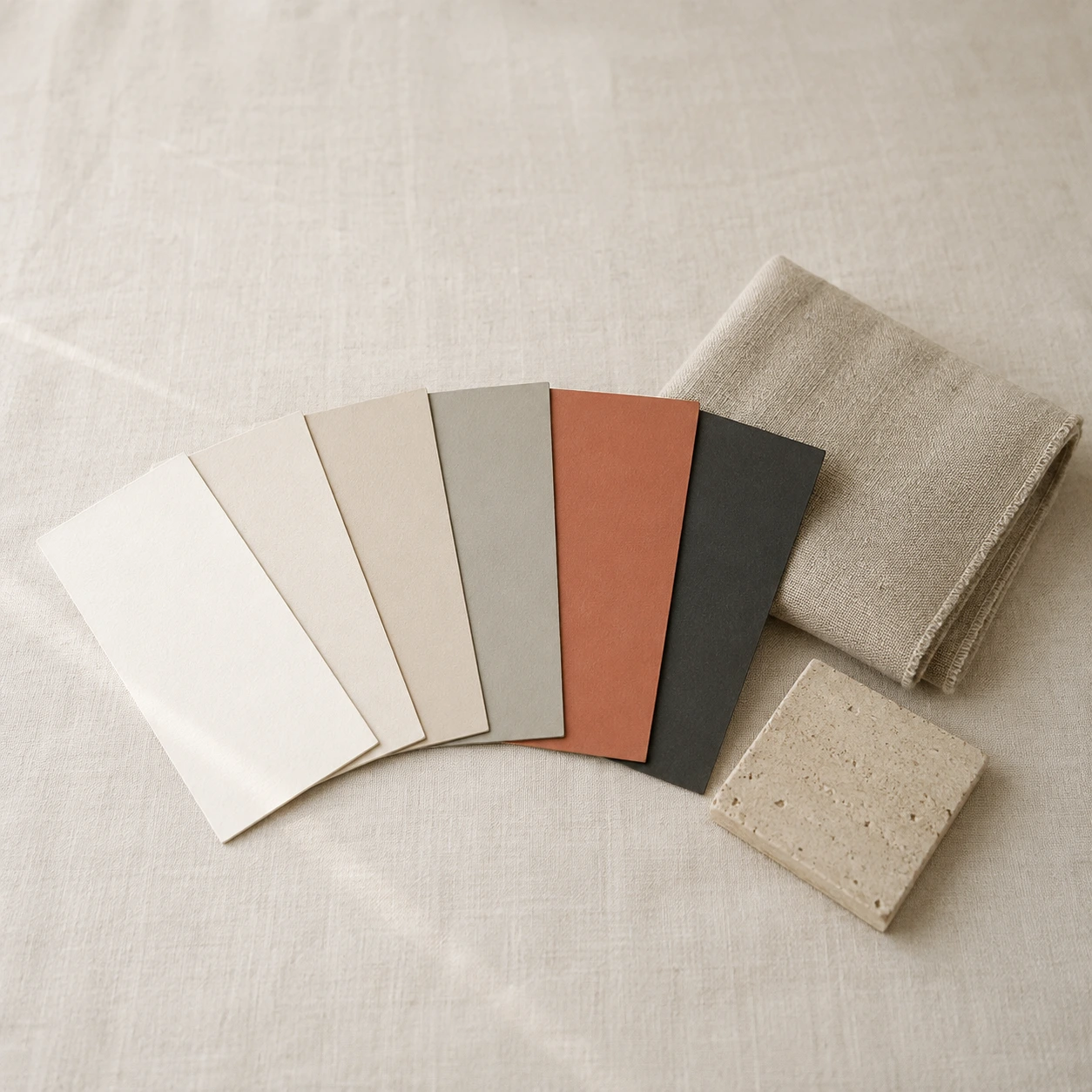
- Build the minimum visual kit. What it is: one good headshot, one typeface pairing, two colours, one mark. Do this first: book the headshot, because it's the single asset doing the most work and the one people delay longest. Our piece on choosing fonts and colours is the short version, and the brand style guide walkthrough is the fuller one for when you're ready.
- Choose one channel and one format, and hold them. What it is: a single place you show up and a single shape you show up in. Do this first: pick the channel your buyers already read, not the one you enjoy. Consistency beats reach at this stage, and consistency is mostly a question of voice, which our guide to finding your brand voice handles in depth.
- Put it on a site you own, not just a profile you rent. What it is: a small site under a domain you control, carrying your positioning, your proof and a way to contact you. Do this first: one page is enough to start. A platform can change its rules, throttle your reach, or lose your audience overnight. Our web design service exists for exactly this moment.
- Build proof in public. What it is: case studies, named outcomes, talks, writing. Do this first: write up one engagement with a real number in it, even a modest one. Proof is what turns attention into enquiries, and it's the difference between being known and being hired.
Decide what you want to be known for, in one sentence
Positioning before aesthetics. Every time. A consultant who can finish the sentence "I help this kind of client do this specific thing in this specific situation" has already made every subsequent design decision easier, because there's now a thing the design has to serve. A consultant who can't finish it will keep rejecting logo options for reasons they can't articulate.
Pick the name you'll trade under
Three options, three different bills later. Your own name is fastest to trust and impossible to sell. Your own name plus a descriptor, something like "Chen Advisory", buys you a little transferability without pretending to be a firm. An invented company name is the most expensive to build recognition for and the only one that lets you exit cleanly. Most consultants we work through this with take three sittings, sometimes four, before they settle . That's normal, and rushing it produces names people regret.
Build the minimum visual kit
Minimum is the operative word. A headshot, two colours, one typeface pairing and one mark will carry a solo practice a long way. It won't scale to a company later without rework, which is fine, because you're not a company yet.
Choose one channel and one format, and hold them
Showing up in four places badly is worse than one place reliably. Buyers need to see you enough times to form an expectation, and expectation comes from repetition of shape, not volume.
Put it on a site you own, not just a profile you rent
When we rebuilt the site for People Analytics Consultants, the change that mattered wasn't the visual refresh. It was that the practitioners' own credibility finally had somewhere to live that wasn't a third-party profile. Enquiry-form completion moved from roughly one visitor in twenty to about one in nine .
Build proof in public
One written-up engagement with a real outcome beats a year of thought leadership. It's also harder, which is why most people do the thought leadership instead.
When to build the business brand instead
Four triggers. When you hit one, the calculation changes and the person-first answer stops being right.
- You want to hire. Nobody can join a personal brand. The moment a second practitioner is delivering work, clients need something other than your name to trust, and your new hire needs something other than your name to sell.
- You want to sell. A business built entirely on one person's reputation has almost no transferable value. If an exit is anywhere in your ten-year picture, the company brand has to start existing now, not at the point of sale.
- You're moving from selling time to selling a product. A course, a tool, a subscription: these need a brand that can be marketed while you sleep.
- The personal brand has become a price ceiling. When buyers value you at "one experienced person's day rate" and you can't get above it, the constraint is structural, not a matter of better positioning. Our piece on the signs a brand no longer fits covers what that looks like from the inside.
At each of these moments, strategy has to come before anything visual, and that's a bigger subject than this article. Read why brand strategy comes first before you commission a single logo option. If you're moving from a solo practice into a company with a team and a product, branding for startups is the right shape of engagement for that transition. Close to a third of the solo clients we work with come back inside two years wanting exactly this .
How to run both at once without confusing anyone
The model that works is endorsed: the person fronts, the company backs. You're the face and the judgement, the company is the delivery and the guarantee. What breaks is when the two compete for the same job.
| The person owns | The company owns | |
|---|---|---|
| Voice | Opinions, judgement calls, the point of view | Process, standards, what clients can rely on |
| Channels | Your LinkedIn profile, talks, writing under your byline | The company page, the website, proposals and invoices |
| Email and domain | you@company.ca, not a free mailbox | The domain itself, which the company keeps if you ever step back |
| Proof | Your track record before this company existed | Case studies delivered under the company name |
Two failure modes show up constantly. A company brand nobody can attach a face to: polished, generic, unable to explain why anyone should trust it. And a personal brand with no company underneath it, where every enquiry lands in a personal inbox and the whole thing stalls if you take a month off. Both are cheaper to avoid than to fix.
What it costs, and what to do in what order
Honest sequencing for a first year, assuming you're solo and revenue is real but not comfortable. Positioning and the trading name cost time, not money, and you should do them yourself. The headshot is worth paying for. The minimum visual kit is the first thing worth a designer's attention. The site comes after you know what it's for. Most Canadian solo practitioners we talk to land somewhere between a long weekend of their own time and a mid-four-figure engagement for that first proper identity , and the range is that wide because the scope genuinely varies.
For a real Canadian number on the logo portion specifically, rather than a range that covers everything, see what a logo costs in Canada. We're not going to restate it here, because pricing that gets copied between articles goes stale fast.
Do it yourself or bring in a designer?
Three of the six steps are genuinely yours. Step one, the positioning sentence, cannot be outsourced, and a designer who offers to write it for you is selling you something you'll have to redo. Step four, choosing a channel and holding it, is a discipline problem, not a design one. Step six, proof in public, is your work and your clients.
Steps two, three and five benefit from someone who's done it before. Naming has traps that are cheap to check and expensive to discover late. The visual kit is where a weekend of your own effort produces something that quietly undercuts you in every proposal. The site is a build, not a design exercise.
And if you're in your first year, still finding your positioning, and revenue is lumpy: not yet. Do steps one, four and six, spend nothing, and come back when the sentence has stopped changing every month. Our brand design service is there when it has.
Frequently Asked Questions
What is a personal brand?
A personal brand is the reputation attached to your name: what people expect of you and what they'll vouch for when you're not in the room. For a consultant it's the working answer to why this specific person should be trusted with this specific problem. It exists whether or not you manage it.
How do I build my own brand?
Start with one sentence about what you want to be known for, then pick the name you'll trade under, build a minimum visual kit, commit to one channel, put everything on a site you own, and publish proof of real outcomes. The order matters: positioning first, aesthetics second. Most people invert it and then can't explain why the design feels wrong.
What are the 5 P's of personal branding?
There's no single agreed set, which is worth knowing before you go looking for one. Different authors offer different lists, usually some combination of purpose, positioning, presence, proof and persistence. Treat the acronym as a memory aid rather than a method, and judge any framework by whether it makes you decide something.
What are the 7 pillars of personal branding?
Like the 5 P's, this is a popular framing rather than an established standard, and the seven items change depending on who's counting. The durable parts across most versions are a clear position, a consistent visual identity, a consistent voice, a channel you actually maintain, published proof, a site you own, and a network that can describe you accurately.
How much does it cost to build a personal brand?
In Canada it ranges from close to nothing to several thousand dollars, depending on how much you do yourself. Positioning, channel discipline and publishing proof cost time only. A headshot, a visual kit and a site are where money goes, and a first-year solo practitioner can reasonably stage them over months rather than buying everything at once.
Six steps, in order: the sentence, the name, the minimum kit, one channel held, a site you own, proof in public. Four triggers that change the answer: hiring, selling, productising, or hitting a price ceiling. Until you hit one of those, lead with the person, and build the company brand quietly underneath so it's there when you need it. Getting the order right is most of the job.
We build brand identities and websites for Canadian consultants and independent practices, including the ones still deciding whose name goes on the door. If you're somewhere in that decision, we're happy to talk it through before you spend anything.